Hi there!
Here we have our challenge number 4!
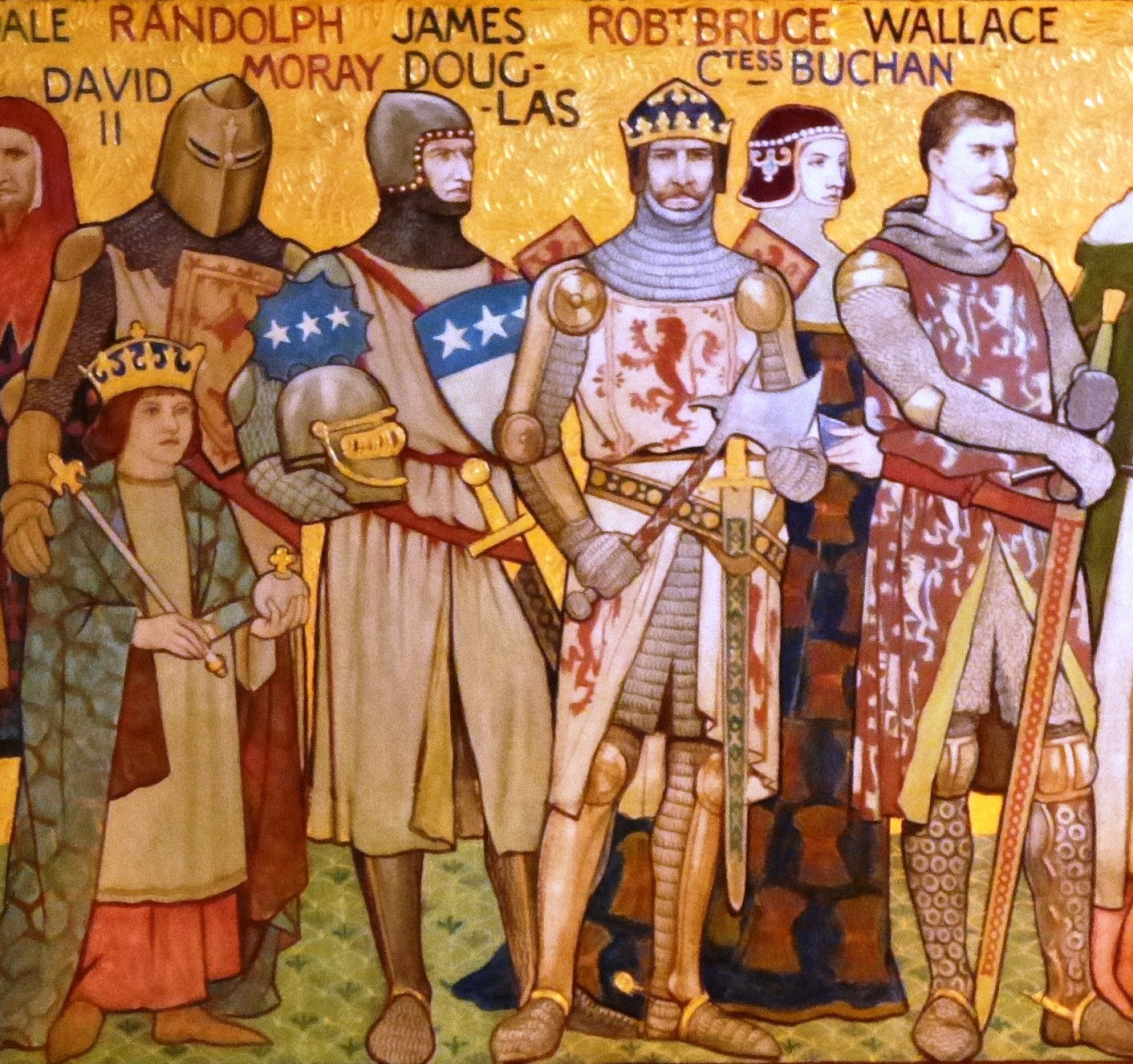
You have to put yourself in a medieval crusader's mind...
So tell me... who you are, when did you live, and why did you become a crusader!?
We have time until next Thursday 5/11!
Hi there!
Here we have our challenge number 4!
You have to put yourself in a medieval crusader's mind...
So tell me... who you are, when did you live, and why did you become a crusader!?
We have time until next Thursday 5/11!

Who was she?
Eleanor of Aquitaine was one of the most powerful women in medieval Europe. She was born around 1122 and became Queen of France and later Queen of England.
What made her special?
She ruled the Duchy of Aquitaine and had great political influence. She also supported culture, literature and the arts.
What challenges did she face?
She lived in a society where men had most of the power. She also faced political conflicts with her husbands and sons and was imprisoned by her husband, King Henry II, for many years.
Can you share one surprising fact about her life?
She was Queen of two different countries: France and England!

Who was she?
Hildegard of Bingen was a German nun, writer, composer and thinker. She was born in 1098 and died in 1179.
What made her special?
She wrote books about religion and nature, composed music and studied medicine. She was also known for her visions, which she believed came from God.
What challenges did she face?
As a woman in the Middle Ages, she had fewer opportunities than men. She had to defend her ideas and convince important religious leaders to listen to her.
Can you share one surprising fact about her life?
She composed music that is still performed today, almost 900 years later!

👑 CHALLENGE 3: WOMEN IN THE MIDDLE AGES – BEYOND THE CASTLE WALLS!
Were women in the Middle Ages really powerless? This week, let's discover some fascinating women who lived during the feudal period!
🔎 Look at the picture and investigate! (Choose one of them)


Who was this woman? Find out her name and when she lived.
What made her special? What did she do that was unusual for women at that time?
What challenges did she face? Think about the role of women in medieval society.
Find one surprising fact about her life that your classmates probably don't know!
⚠️ Remember: Don't copy and paste! Use your own words and write complete sentences.
🏆 The most interesting and well-explained comment wins a card!
🏰 CHALLENGE 2: SOLUTION – CHARLEMAGNE'S LEGACY!
The building in the picture is the Palatine Chapel of Aachen (Aachen Cathedral).

It is the Palatine Chapel, a religious building used as the private chapel of Charlemagne's imperial palace. It was a place for Christian worship and imperial ceremonies.
2. Where is it located?
It is located in Aachen, in present-day Germany, near the borders with Belgium and the Netherlands.
3. Who ordered it to be built, and what was its connection to Charlemagne?

4. One interesting fact
The chapel was consecrated in 805. Its impressive octagonal design was inspired by earlier Byzantine architecture, especially the Church of San Vitale in Ravenna, Italy. In 936, Otto I was crowned king of the East Franks there, and Aachen became the traditional coronation site for many German kings.
OTHER INTERESTING FACTS:
A UNESCO World Heritage Site: Aachen Cathedral was one of the first 12 sites to be included on the UNESCO World Heritage List in 1978.
Charlemagne's tomb: Charlemagne was buried in the chapel in 814, and his remains are associated with the cathedral's famous golden shrine.
A medieval masterpiece: The chapel's dome was decorated with mosaics, including a representation of Christ surrounded by the elders of the Apocalypse.
A royal coronation site: For approximately 600 years, from 936 to 1531, 30 German kings were crowned in Aachen.
Ancient columns: Charlemagne had columns and other materials brought from Rome and Ravenna to decorate his palace chapel.
Well done to everyone who took part in the challenge!
Napoleon Fact or Fiction?
Challenge: Can you discover a surprising, weird or little-known fact about Napoleon Bonaparte?
Investigate: Find an unusual fact about Napoleon and check that it is supported by a reliable source.
Explain: Write 2–3 sentences explaining what happened.
Reflect: Does this fact change your opinion of Napoleon? Why or why not?
Give your source: Include a link to the website or source where you found the information.
💡 Example:
Did you know that Napoleon was supposedly once overwhelmed by a group of rabbits during a hunting trip? According to an anecdote recorded by a French general, the rabbits ran towards the hunters instead of escaping. Although the story is famous, some details are difficult to verify!

Your turn! Can you find a fact that will surprise your classmates?

One interesting fact is that she was only 14 years old when she left Austria to marry the future king of France!
In my opinion, she was both responsible for some of her bad reputation and a victim of propaganda. Her extravagant image made her unpopular, but the famous phrase “Let them eat cake” is not supported by reliable historical evidence and was probably wrongly attributed to her. This shows how rumours could damage her reputation.

